Fort Worth Leak Detection is a referral and matching service. We connect you with independent, TSBPE-licensed local plumbers; we don’t perform the work ourselves. Here’s how to tell these leaks apart and what repair usually involves.
The main water service line
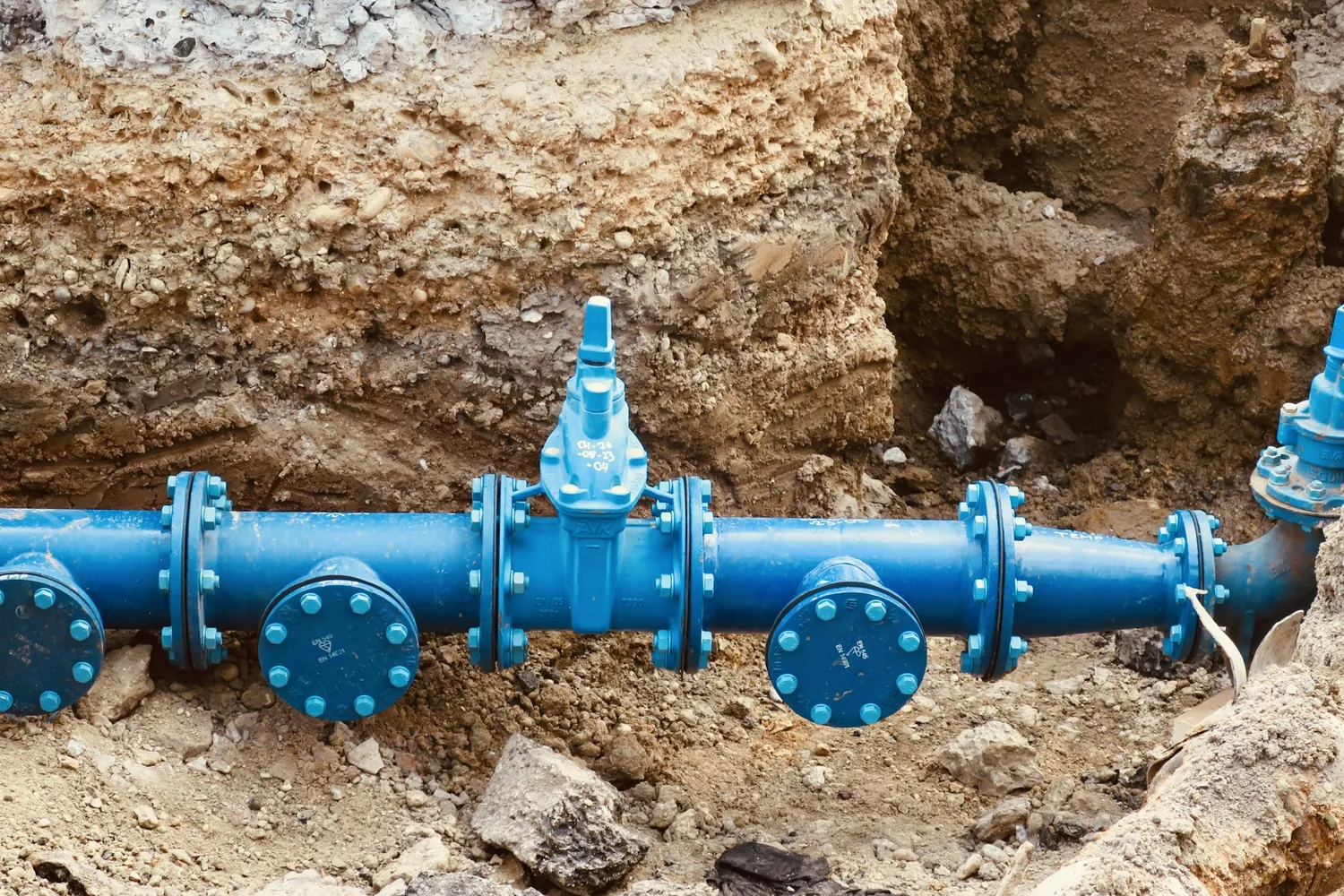
Your water service line carries pressurized water from the city meter (usually near the street) to your house. In most North Texas cities, the city is responsible for the meter and the main in the street, and the homeowner is responsible for the line from the meter to the house. Your city’s water utility can confirm exactly where its responsibility ends.
Signs of a water line leak
- A soggy or unusually green patch in the yard, especially in dry weather
- Water pooling near the meter box or along the path to the house
- A meter that keeps moving even after you close the home’s main shut-off valve
- A sudden drop in water pressure
- A higher bill with no obvious indoor leak
The meter test on our slab leak detection page helps narrow it down: if the meter stops when you close the house shut-off, the leak is inside. If it keeps moving, suspect the yard line, or irrigation if you have a sprinkler system.
Repair options
A plumber can repair a single damaged section by digging at the leak, or replace the whole service line if it’s old, undersized, or has leaked before. Replacement may be done by trenching or by trenchless methods that pull a new line through with minimal digging. Older homes may have galvanized steel service lines that corrode over time, and replacing them often improves water pressure too.
Drain and sewer leaks
Drain lines aren’t pressurized, so they don’t spin the water meter. A leak in a drain or sewer line under a slab can go unnoticed for a long time, and the wastewater it releases can saturate soil under the house.
Signs of a sewer or drain leak
- Sewer odors inside, especially near floor drains or in a particular room
- Slow drains or repeated backups in more than one fixture
- Gurgling toilets or drains
- Damp flooring or mildew with no supply-line leak found
- Soggy spots or lush grass over the sewer path in the yard
- Insects or rodents finding their way in through drains
How sewer leaks are found
- Camera inspection. A waterproof camera runs through the line from a cleanout to show cracks, separated joints, root intrusion, sagging sections (“bellies”), or collapsed pipe.
- Hydrostatic test. The drain system is plugged and filled with water, and the plumber watches for the level to drop. It’s often done before foundation repair, and sometimes during a home purchase. It’s good at showing whether there’s a leak, but it doesn’t always pinpoint it.
- Smoke or dye testing in some situations to trace where wastewater escapes.
Common causes in older homes
Many older homes in the Fort Worth area have cast iron drain lines under the slab. Cast iron can corrode and crack from the inside over decades. Clay sewer pipe in yards is vulnerable to tree roots. Newer homes typically use PVC, which holds up well but can still separate at joints when the soil moves.
Repair options
- Spot repair of a damaged section through the slab or by tunneling
- Pipe lining (cured-in-place pipe), which forms a new pipe inside the old one, in suitable lines
- Pipe bursting or trenchless replacement of yard sewer lines
- Full replacement of under-slab drain lines when damage is widespread
Ask to see the camera footage yourself. A reputable plumber will show you what they found and explain why they recommend a particular repair.
Why this matters for your foundation
On expansive clay, water from a sewer or supply leak can make soil swell in one area or wash it away in another, and either can stress a slab. If you’re seeing foundation symptoms along with a leak, fix the leak first, then have the foundation evaluated. Our sister site Fort Worth Foundation Fix can help with that step.
Costs and insurance
Costs vary widely: a single yard-line repair is a very different job from replacing cast iron drains under a slab. Get the scope in writing, including concrete, landscaping, and permit fees. Homeowners policies generally don’t cover worn-out pipe. Some insurers offer a separate service line endorsement for buried lines in the yard. Check your policy and see our FAQ on costs and insurance.
Licensing and permits
Water service and sewer work in Texas is licensed plumbing work, and most cities require permits for line replacement. Verify any plumber on the TSBPE public license search.
Common questions
Who pays to fix the line between the meter and my house?
In most North Texas cities, the homeowner is responsible for the service line from the meter to the house, and the city handles the meter and the main. Call your city’s water utility to confirm where the boundary is for your property.
Is a sewer smell always a leak?
Not always. A dry floor drain trap or a failed toilet wax ring can cause sewer odors too. If simple fixes don’t solve it, a camera inspection or drain test is the next step.
What is a hydrostatic test?
The plumber plugs the drain system, fills it with water, and watches whether the water level drops over time. A drop points to a leak somewhere in the under-slab drain lines.